Author: puradm

  • Why I Trust the Monero GUI Wallet for Real-World Privacy

    Here’s the thing. Monero isn’t just another coin with a privacy checkbox. It feels different, because its privacy is baked in at a protocol level, not bolted on as an option. Initially I thought privacy coins were all smoke and mirrors, but then I dug into ring signatures and stealth addresses and my skepticism softened. On one hand privacy is a technical feature; on the other, it’s a social requirement for anyone who values financial autonomy, though that line is fuzzy sometimes.

    Whoa, seriously? My first run with the Monero GUI wallet surprised me. The GUI is simple enough for someone who isn’t a node jockey, yet it exposes the controls you need when you care about privacy. I’ll be honest—some parts of the UX bug me, but they don’t compromise core privacy, and that’s what counts. My instinct said to run a local node, but then I realized syncing can be painless if you plan a little.

    Hmm… somethin’ felt off the first time I used a remote node. I got faster sync, but my threat model changed, because a remote node can see which outputs my wallet requests. On the other hand, for casual use, remote nodes are a practical trade-off; though actually, if you want the strongest privacy, run your own node. Something else to remember is that a local node also contributes to the Monero network, which matters.

    Okay, so check this out—rings, stealth addresses, and bulletproofs all work together. Ring signatures hide which input in a transaction is actually being spent by blending it with several decoys, so observers can’t trivially point to your spend. Stealth addresses create one-time destination addresses for each incoming payment, meaning public ledgers don’t show a static address you reuse forever. Bulletproofs compress range proofs to keep transactions smaller and cheaper, while maintaining confidentiality for amounts, which is neat and practical.

    Really? You can tweak more than you think. The GUI wallet lets you choose your mixin/ring size defaults, view key image management, and inspect incoming/outgoing transactions, without exposing private view keys to strangers. Initially I thought exposing a view-only wallet was harmless, but then I saw how view-only access can leak patterns if you mis-handle backups. So back up everything, multiple times, and store mnemonics securely in different locations.

    Screenshot of Monero GUI wallet main screen with balance and transactions visible

    How I handle anonymous transactions and the Monero GUI wallet (and where to get a clean build)

    Here’s the thing. If you want a straightforward place to start, grab a verified copy via a trusted download link to avoid tampered binaries. I usually recommend checking signatures and hashes before launching any wallet, and yes, the installer you fetch should be verified; you can get a standard distribution via a link like monero wallet download which points to a convenient starting place. On a practical level, the GUI walks you through creating a wallet, restoring from seed, and connecting to a local or remote node, which is great for folks migrating from custodial services. Remember—using a remote node reduces your privacy slightly, and running your own node is better if your goal is maximum anonymity and trust-minimization.

    Whoa! Little habits matter a lot. Use separate wallets for different purposes—savings, everyday spending, and any experimental stuff—so linking is harder for outside observers. Initially I lumped everything together, and later I regretted it, because mixing contexts makes deanonymization easier if someone analyzes spending patterns. On the other hand it’s inconvenient to juggle many wallets, though actually the trade-off is worth it for serious privacy. I keep an encrypted USB with cold-wallet seeds for long-term holdings, and a hot wallet for small, day-to-day amounts.

    Here’s the thing. Network-level protections like Tor or i2p make fingerprinting harder. The GUI supports proxying through Tor, and when combined with a local node you get layered privacy benefits, though latency can increase and setups may get fiddly. I’m biased toward Tor because it’s widely supported and relatively easy to use on desktop systems. That said, I occasionally run into subtle leaks if I’m careless with DNS or if apps on my machine behave oddly, so segregating environments helps—use a dedicated machine or VM if you can.

    Seriously? Address reuse is the enemy. It seems obvious, but reusing addresses or patterns of reuse makes you trackable. Create fresh addresses for each counterpart or transaction, and monitor outgoing transaction patterns to ensure nothing links back in obvious ways. Initially I underestimated the importance of unique addresses for privacy when I was testing, but after a couple of mistakes my approach hardened. Pro tip: the GUI’s integrated address book is handy for labeling while keeping unique subaddresses for payments.

    Hmm… trust and verification matter more than most users realize. Verify the wallet binaries, check PGP signatures when available, and prefer releases signed by core contributors. Something else: community channels and release notes often flag security issues early, so skim them. I’m not 100% sure you can eliminate every vector, but taking these steps reduces risk significantly, and that’s the goal.

    FAQ: Quick answers for common concerns

    Is Monero truly anonymous?

    Here’s the thing. Monero provides strong privacy primitives by default—ring signatures, stealth addresses, and confidential transactions combine to hide senders, recipients, and amounts. However, absolute anonymity depends on your whole operational security stack, including how you obtain funds, which nodes you use, and how you handle metadata. Initially some folks assume protocol-level privacy equals total anonymity, but real privacy is a system property, not just a feature.

    Should I run a local node or use a remote node?

    Whoa! If you want maximal privacy and don’t mind the disk and bandwidth, run a local node. It gives you trust-minimized validation and helps the network. If convenience trumps everything, remote nodes are okay for small amounts, though they introduce a new trust vector. Personally I run a local node at home and use a remote node only in emergencies.

    What about backups and seeds?

    Really? Backups are everything. Write your mnemonic seed on paper (or metal if you fear fire), store copies in separate secure locations, and consider a passphrase for extra protection. If you lose the seed, you lose access—period. Also check recovery by restoring to a test device before relying solely on backups.


  • Why a Hardware Wallet Still Matters: Practical, No-Nonsense Guide to Securing Your Crypto

    Okay, so check this out—hardware wallets are one of those things everyone nods about but few really use the right way. Wow! They keep your private keys offline. That simple fact changes everything. My gut says people underestimate how often social engineering and sloppy habits defeat technical protections.

    I’ve been using hardware wallets for years. Seriously, I screw up sometimes. But the device keeps me safe when I do. At a garage-sale level, the threat is obvious: malware on a laptop, a dodgy exchange, phishing messages. On a higher level, it’s subtle: your phone’s cloud backups, reused passphrases, and honest mistakes that leak recovery seeds. Initially I thought software wallets were “good enough,” but then I watched someone paste their seed into a fake recovery form. Oof—learned fast.

    Short version: a hardware wallet isolates private keys and requires physical confirmation for transactions. That’s the non-sexy, crucial part. It sounds obvious, though actually many people treat their hardware wallet like a safety blanket they never test. Don’t do that.

    How it works—briefly. The device generates and stores your seed. It signs transactions locally. Your computer or phone only sees unsigned data and signed transactions. Which means even if your computer is compromised, attackers can’t extract the seed without physical access and the PIN. Hmm… that said, nothing is bulletproof. Passphrases, supply-chain risks, and human error matter a lot.

    A hardware wallet on a coffee table with a notebook and coffee cup

    Real-world risks and how to handle them

    Supply-chain tampering is real. Buy from reputable sources and verify packaging, but also be realistic—most attacks are cheaper and easier: phishing, SIM swaps, and social engineering. Something felt off about a supposedly “customer support” DM? Trust your instinct. If you get a support message asking for a seed or to install “special firmware,” hang up—literally.

    Backup strategy matters as much as the device itself. Use a seed backup stored physically, not a screenshot, not a cloud note. Really—no cloud. I’m biased, but paper or metal backups are your friend. Consider distributing backups in separate secure locations (a safe, a deposit box, a trusted attorney). Make sure someone you trust knows how to access it if they must—but also never give out the seed in plain text.

    Passphrases add a layer often misunderstood. A passphrase (aka 25th word) can create a hidden wallet that looks like nothing exists unless you enter it. Powerful, yes. Dangerous, if you forget it. So: treat passphrases like a separate key. Test recovery. Practice the whole restore process on a throwaway device. Seriously—do a dry run the first time. It avoids panic later.

    On the topic of testing—test restores. Many skip this. It’s very very important to practice a full restore. That way, when things go sideways, you aren’t making critical mistakes during a stressful situation. Also, keep firmware up to date—but don’t blindly apply updates when you’re unsure. Research the release and verify signatures when possible.

    If you want a practical place to start, check an official resource I use sometimes for device info: https://sites.google.com/trezorsuite.cfd/trezor-official-site/ —it’s one place people link to for setup tips (oh, and be careful verifying any site; confirm addresses and community feedback).

    Everyday security checklist

    – Buy from legitimate retailers or the manufacturer’s store.
    – Set a PIN and never write it on or near the device.
    – Backup your seed offline and verify it.
    – Consider a passphrase only if you can reliably store and remember it.
    – Update firmware from verified sources, but read first.
    – Use a dedicated, minimal computer for large transfers when possible.
    – Avoid entering your seed into any website or app.

    Short pause. Really—stop. If you ever get a message telling you to “enter your seed to fix X,” it’s a scam. Repeat that to yourself. It’ll stick.

    Advanced tips for power users

    If you’re holding big sums, consider splitting funds across multiple devices or using multisig. Multisignature wallets distribute risk: an attacker needs several keys to move funds. It’s more complex, yes, but for long-term holdings it can be worth the setup pain. On one hand multisig complicates recovery; though actually, with planning, it provides stronger protection than single-device setups.

    Hardware security modules (HSMs) and air-gapped setups are niche but effective. They keep the signing environment isolated from the internet entirely. Not for everyone—it’s fiddly, and honestly this part bugs me because people try to DIY without knowing tradeoffs. If you’re going that route, read deeply, and consider consulting a trusted specialist.

    FAQ

    Q: Can a hardware wallet be hacked remotely?

    A: Generally no, not without local access or social-engineering the owner. Remote compromises are far more likely to occur through your connected computer, your phone, or scams that trick you into revealing recovery data. Keep devices and software updated, and don’t share seeds or passphrases.

    Q: Is it okay to keep a screenshot of my seed in an encrypted cloud folder?

    A: Short answer: don’t. Encryption in the cloud can be strong, but cloud services and endpoints are common attack vectors. If you choose to store a backup digitally, encrypt it locally with a robust method and keep multiple physical copies in secure locations. Paper or metal backups remain the simplest, most resilient options.

    I’ll be honest: no setup is perfect. My instinct said “simplify” early on, but experience pushed me toward layered defenses. On one hand, simplicity reduces mistakes; on the other hand, redundancy protects against single points of failure. Balance matters. Practice, document your process (securely), and rehearse recovery steps. If something feels weird during setup—stop and verify. Take a breath… then continue.

  • Why a Mobile dApp Browser and a Secure Wallet Should Be Your Crypto Duo

    Whoa!
    Okay, so check this out—mobile dApp browsers are quietly changing how people interact with crypto.
    I’m biased, but after years of fumbling with seed phrases and clunky desktop tools, the convenience shift feels real.
    Initially I thought wallets were just vaults for tokens, but then I started using built-in browsers and realized they are gateways to a whole new app layer that lives in your pocket, with UX trade-offs and security puzzles you can’t ignore.
    This piece walks through what to look for and why a secure mobile wallet matters, plus practical steps to stay safer.

    Really?
    A dApp browser lets your mobile wallet talk directly to decentralized apps without middlemen.
    It injects a Web3 provider into web pages so you can sign transactions, approve permissions, and interact with smart contracts.
    On one hand that makes things smooth and immediate; on the other hand it opens a direct channel where mistakes or malice can cost real crypto.
    So yeah, the convenience is seductive—and that’s when my gut said, “slow down.”

    Here’s the thing.
    Not all dApp integrations are created equal.
    Some wallets only offer a barebones browser that feels like a basic WebView, while others add guardrails and permission prompts that actually matter.
    My instinct said look for permission granularity—meaning can you approve just one token transfer or are you handing over a blank check?
    I learned this the hard way when I once clicked through a prompt that turned out to be very very permissive, and had to scramble to revoke approvals later.

    Hmm…
    Security basics first.
    Keep your seed phrase offline and never paste it into a webpage; that advice is basic but still worth repeating.
    But beyond the seed there are practical UX cues to watch: explicit origin labels, clear transaction previews, and descriptive gas estimates that don’t hide fees in tiny text.
    On more technical apps, look for EIP-712 support so signatures are human-readable instead of opaque hex blobs—this matters when you’re approving complex contract interactions.

    Okay, so check this out—user experience shapes behavior.
    If a wallet buries revoke controls or obfuscates which dApp has access, people will keep clicking yes until something goes wrong.
    I used to assume everyone reads prompts; turns out most folks skim and trust the interface.
    That mismatch is fertile ground for social engineering and malicious contracts.
    So design matters. And policy matters. (oh, and by the way…) wallets with better design help reduce user error.

    Screenshot of a mobile wallet dApp permission prompt with clear labels

    Choosing the right combo: secure wallet + responsible dApp browser

    I’ll be honest—I’ve tried a dozen wallets on iPhone and Android, and one thing kept sticking out: the ones that felt safest balanced friction and clarity.
    Trust in the UI doesn’t mean complacency.
    For example, some wallets flag suspicious contracts and add an extra confirmation step; that pause often prevented me from making a rushed mistake.
    If you want a practical place to start, consider a wallet that merges multisig, local key control, and a vetted dApp browser, like trust wallet, which many mobile users find approachable while still offering sensible permission flows.
    I’m not saying it’s perfect—no wallet is—but it’s a solid baseline for folks who prioritize mobile convenience without throwing security out the window.

    Something felt off about trusting any single app though.
    So here’s a layered approach that worked for me.
    First: separate funds by purpose—hot wallet for daily app use, cold storage for long-term holdings.
    Second: keep small test amounts when trying unknown dApps.
    Third: use hardware-backed keys or OS keystores when available to reduce exposure.
    These are simple heuristics, but they cut down the “oh no” moments.

    On the technical front, there are a few red flags to watch for.
    DApps that request broad approvals like “approve unlimited” should trigger caution.
    Also, unclear redirect behaviors or pop-up windows that ask you to sign immediately are suspicious.
    Initially I thought heavy permissions were just poor UX, but then I realized many scams rely on that very friction to trick users.
    So pay attention to nuance—your wallet’s permission manager is your first line of defense.

    On the other hand, sometimes permissions are legitimately needed.
    Complex DeFi interactions can require multi-step approvals and contracts calling other contracts.
    In those cases you want the wallet to show call data details and let you inspect who will receive funds, not just the number on the screen.
    If you see a long hex string as the only explanation, ask for a prettier interface or decline until you can verify.
    Yes, it’s annoying. Yes, it takes time. But it’s saved me from making a transaction that would have required days of remediation.

    Curiosity turned into a routine for me.
    Before connecting to any dApp I now check three quick things: origin (is the URL correct?), permissions (do I need to allow everything?), and reputation (community threads or audits).
    This habit cuts stupid mistakes by a lot.
    I’m not perfect—far from it—but forming that checklist changed my loss rate.
    Also, I keep a small, separate wallet for experimental apps; that one gets the risky clicks.

    FAQ

    What is the difference between a dApp browser and a regular browser?

    A dApp browser injects a Web3 provider into webpages so they can interact with your wallet directly, while a regular browser doesn’t natively connect to your crypto keys; in short, dApp browsers bridge the web and your wallet’s signing capabilities, which makes instant interactions possible but also creates unique security considerations.

    How can I reduce risk when using mobile dApps?

    Use small test transactions, separate funds (hot vs cold), verify URLs, avoid unlimited approvals, enable hardware-backed key storage where possible, and prefer wallets with clear permission UIs; those habits reduce exposure to phishing and malicious contracts, though they don’t eliminate risk entirely.

    Is a built-in dApp browser less secure than connecting via WalletConnect?

    Not inherently. Both methods have trade-offs—WalletConnect keeps your keys out of the browser session when you connect from another device, while built-in browsers can offer tighter UI integration and instant signing; pick the flow that matches your threat model, and be mindful of permissions either way.

    Okay, here’s my final, honest take—I’m optimistic but cautious.
    Mobile dApp browsers are the UX breakthrough crypto needed, yet they amplify human error.
    If you care about convenience, you still owe it to yourself to be deliberate about permissions and wallet choice.
    This isn’t rocket science, but it does require habits and some skepticism.
    Try things slowly, test with tiny amounts, and don’t be embarrassed to revoke permissions later—seriously, I do it all the time.

  • Why veBAL, Stable Pools, and Governance Are the Real DeFi Puzzle Right Now

    Whoa! I keep circling back to Balancer’s governance design lately. Really, it rewards long-term alignment in an unusually elegant way. Initially I thought ve-token models were a fad, easily gamed by short-term actors and yield chasers, but then I dug deeper and realized the lock-to-vote mechanism actually changes incentives over multiple time horizons. My instinct said this would be more theoretical than practical.

    Seriously? Governance matters because liquidity protocols don’t run themselves anymore. Stable pools add another layer of nuance to that governance problem. On one hand stable pools reduce impermanent loss and attract conservative LPs who prefer predictable exposure, though actually their behavior in nested strategies and composability can create concentration risks that require active oversight from token-holders and delegates. Something felt off about the old token-weighted votes model.

    Hmm… veBAL is Balancer’s answer to those governance and liquidity tensions. Lock BAL, get veBAL, gain voting power and boost fees. But it’s not just about governance — veBAL alters liquidity provision decisions, steers emissions, and when used thoughtfully can make stable pools more resilient by aligning LPs toward steady, low-slippage markets rather than short-duration yield exploits. I’ll be honest, that alignment looks appealing for DeFi builders.

    Dashboard mockup showing ve balances, gauge weights, and pool health metrics

    Wow! Yet ve models bring trade-offs we shouldn’t gloss over. Vote escrow concentrates power with locked, long-term holders mostly. Initially I thought concentration was the biggest worry, though actually the nuanced problem is liquidity concentration inside particular pools and weighted gauges where rewards funnel disproportionately, which can create fragility if a few actors control both assets and votes. My instinct said decentralization was clearly at risk here.

    Here’s the thing. Stable pools themselves are structurally different from constant-product AMMs. They trade like baskets and prioritize peg maintenance over volatile price discovery. When you overlay gauge incentives and ve governance onto stable pools, you get a system where votes can reallocate emissions toward pools that optimize for throughput and peg stability, but that same lever can distort market-making incentives if not calibrated with slippage curves and dynamic fees. Check this out—fees, fees, and fee symmetry all matter.

    Whoa! Design choices here are deeply technical and political too. Gauge weightings, emission schedules, and lock durations all interact. Initially I favored longer locks to secure alignment, but then realized very long locks reduce capital agility, discourage newcomers, and can entrench older players, so a mixed-duration strategy with capped vote weight might balance long-term commitment and fresh liquidity entry. I’m biased, but hybrid models feel pragmatic and realistic.

    Really? Operational governance and the delegation layer matter a ton. Delegates can be efficient, but they must be accountable. On one hand delegation unlocks participation for tokenholders who lack time or expertise, though on the other hand it introduces new centralization vectors that need on-chain reputational mechanisms and slashing-like deterrents to keep delegates aligned. Somethin’ as simple as clearer vote receipts would help.

    Whoa! One practical step is dynamic emissions tied to real metrics. Think TVL stability, peg deviation, and actual fee capture. A governance process that can re-weight gauges based on objective oracles when pools deviate beyond thresholds, while still respecting lock-based voting power, might stop incentive chasing without undermining long-term holders’ voice. On the flip side, too many tweaks confuse LPs.

    I’m not 100% sure, but tooling matters for transparent votes and gauge analytics. The community needs dashboards that show intent and outcomes clearly. I recall an instance where reward shifts caused massive rebalancings because LPs chased emissions without seeing the long-term peg impacts, and that experience made me push for better on-chain signals and pre-proposal simulations. This sort of feedback loop is very very important.

    Wow! Single-metric governance frameworks are tempting because they feel simple. But markets are multidimensional, noisy, and often deceptive too. So balance is required: keep emission rules predictable enough for LPs to plan, yet flexible enough to respond to oracle-driven shocks, and design delegation markets so that reputation composes with lock length rather than replacing it. In short, design for slow adaptation and for firm guardrails.

    Where to look next

    If you’re building on Balancer you should understand the politics. Read proposals, watch delegate votes, and simulate outcomes ahead. I’ll be candid—participation costs time, and not everyone can scrutinize slippage curves or gauge math, which is why a vibrant delegate ecosystem, clear documentation, and tools from teams and third parties are essential for long-run health. Check out the balancer official site for protocol docs and links.

    Alright. Final thought: ve models are powerful tools but also blunt. Stable pools can materially benefit if governance consistently acts responsibly. On the whole I’m optimistic that with good analytics, mixed lock durations, transparent delegates, and incentive formulas that respect both peg health and long-term holders, Balancer-style systems can deliver sustainable, low-slippage liquidity without handing undue power to a handful of players. I’m biased, but I want DeFi that lasts and stays fair.

    FAQ

    How does veBAL actually change LP behavior?

    Locking BAL converts future emissions into present governance power and fee boosts, which nudges LPs to prefer pools with aligned incentives and long-term return prospects; that typically reduces hyper-short-term hopping but can also centralize influence if not managed.

    Are stable pools safer with ve governance?

    They can be, because gauge-directed emissions can reward peg maintenance and deep liquidity, but safety depends on emission design, slippage curve tuning, and monitoring for concentration risk—so governance quality matters a lot.

    What practical guardrails help?

    Mixed lock durations, emission formulas tied to multiple metrics, transparent delegation, pre-proposal simulations, and clear dashboards are practical steps that lower attack surface while keeping alignment mechanisms effective.

  • Picking a Cosmos Validator: Practical Advice for ATOM Holders

    Okay, so check this out—staking ATOM feels simple on the surface. Whoa! Most wallets make it easy to click and delegate, but somethin’ about that simplicity hides trade-offs. You can chase the highest APR, or you can protect your principal and the network. Hmm… my bias is toward security and decentralization, even if that means lower short-term yields.

    First impressions matter. Seriously? Yes. A validator’s landing page or Telegram might be polished, but polish doesn’t equal reliability. Look beyond the marketing. Uptime, missed blocks, and voting participation are the measurable signals that actually matter. And on one hand you want a low commission; on the other hand you want sound operational practices and good community behavior—so balance is key.

    Here are the core metrics you should check when evaluating a validator. Short list first: uptime, missed blocks, commission rate, self-delegation, total voting power, and whether they publish contact info and an incident policy. Medium detail: uptime and missed blocks tell you if they run stable infra. Long thought: because Cosmos rewards depend on active participation and because slashing penalties are real—particularly for downtime or double-signing—you should prefer validators who clearly instrument monitoring, post runbooks, and show a track record of quick recovery after incidents.

    Commission is tempting. Low commission boosts your cut. But—actually, wait—let me rephrase that: commission alone is a poor proxy for quality. A 0% commission validator may be unsustainably subsidized or run by people who can’t scale secure operations. Conversely, a slightly higher commission might fund professional ops, backups, and hardware security modules. On balance, I often prefer validators with transparent fees and a rationale for how fees are used.

    Delegation concentration matters too. If one validator holds a massive slice of stake, that centralizes governance and increases systemic risk. So split your stake. Two or three validators is a reasonable starting point. Why? Because diversification reduces single-point failures and spreads out voting power. Oh, and by the way—watch for “vote buying” schemes; they exist and they bug me.

    Illustration of Cosmos network nodes and validators in action

    Practical steps for choosing a validator (without overthinking)

    Start with on-chain data. Check the active set, find validators with consistent uptime and low missed blocks over months, not just days. Check their self-delegation percentage; validators who have skin in the game are usually more careful. Then look off-chain: do they publish keys rotation, do they answer governance votes, do they disclose multiple operators for redundancy? If you want a practical tool, try managing delegation and IBC transfers in a browser wallet—I’ve used Keplr for this and you can find it here.

    IBC transfers add another layer. Cross-chain moves require open channels, compatible denom handling, and fee planning. Really. If you’re moving tokens to a chain for higher yields, factor in transfer fees and packet timeout risks. Some IBC transfers are near-instant, others take retries depending on the relayers and channel state. My instinct said “it’s just a transfer” the first time I tried, though actually the network conditions mattered more than I expected.

    Security hygiene is non-negotiable. Look for validators that promote best practices: offline key management, multi-sig for community validators, regular backups, and public incident disclosure. Hmm… signs of sloppy security include: no contact, no runbook, and mysterious “maintenance” outages. Also pay attention to whether they encourage hardware wallet delegation—this reduces hot-key exposure for users.

    Slashing: this is the real risk. The Cosmos Hub historically has an unbonding period around 21 days. During that window your ATOM is illiquid, which matters if markets swing. Slashing for double-signing or prolonged downtime can cut your staked amount. So ask: how quickly did the validator recover when they had incidents before? Do they communicate transparently? Validators who hide problems are red flags.

    Governance participation is underrated. Validators cast votes that affect protocol upgrades, parameter changes, and even inflation. A validator who consistently abstains might be less desirable if you care about the future direction of the chain. Conversely, a validator who’s aggressive in governance could be aligned with your values, or could push risky changes. It’s politics, really—crypto is politics in code.

    Reward compounding strategies deserve a small paragraph. You can claim rewards frequently and redelegate. But frequent claiming costs fees and may create more on-chain activity. For many retail delegators, monthly or weekly compounding is a reasonable middle path. I’m biased, but I find monthly compounding balances effort and yield.

    Monitoring your delegations is ongoing. Validators can change commission, suffer outages, or alter their operations. Set alerts, use dashboards, and periodically rebalance. Also consider social signals: does the operator engage in the Cosmos community? Do they sponsor ecosystem tooling? These qualitative signals matter even though they’re fuzzy.

    Common questions from ATOM users

    How many validators should I delegate to?

    Two to three is a good start for retail users. It gives diversification without being hard to manage. You can scale up as you get comfortable. If you split across too many validators, fees and monitoring overhead can outweigh the benefits.

    What commission rate is “good”?

    There’s no one-size-fits-all. Low commission (5%–10%) is attractive, but validate that the operator can sustain operations. Slightly higher commissions (10%–20%) can be fine if the validator publishes transparent operational practices and uptime is excellent.

    Should I use a browser wallet or hardware wallet for staking?

    Use both when possible. Keplr offers convenient staking and IBC UX in-browser, while a hardware wallet keeps your keys cold and secure for delegation approvals. The mix depends on your threat model: if you hold significant funds, prioritize hardware-based approvals.

    I’ll be honest—validator selection has a little art in it, not just science. There are quantitative metrics you can measure, and there are qualitative signals that matter more than you’d think. Something felt off about blindly following APRs when I started. Over time I learned to value transparency, resilience, and community alignment above flashy returns.

    Final thing: document your choices. Keep a small note on why you picked each validator and when you last checked their performance. Seriously, that note helps when the market gets noisy and you need to decide rationally rather than emotionally. And hey—if you’re looking for a straightforward wallet to manage staking and IBC, remember the Keplr option I mentioned earlier.

  • Why Fast, Reliable Bridges Matter — and How Relay Designs Change the Game

    Whoa!

    Bridges are the connective tissue of DeFi today, and they move value across chains.

    When they work, everything feels instant and effortless for users, but when they fail the fallout is very visible.

    Initially I thought bridging was mostly about token transfers, but then I dug into cross-chain messaging and realized it’s really about trust, finality, and liquidity routing.

    On one hand you want speed; on the other hand you need security guarantees that survive chain reorganizations and subtle attack vectors, though actually that balance is messy and requires trade-offs.

    Really?

    Yes — most people focus on the fee or the time they see on the UI.

    They forget that a “fast” bridge can mean very different things: instant user settlement versus protocol-final settlement versus optimistic finality waiting windows.

    My instinct said shorter confirmations were safer for UX, but deeper analysis showed longer finality windows buy you more resilience against MEV and replay attacks.

    So you end up juggling user expectations and the underlying consensus properties in ways that are not obvious at first glance.

    Here’s the thing.

    Not all fast bridges are the same, and the mechanisms behind that speed matter a lot for risk profiles.

    Some bridges use custodial or federated validators; others rely on cryptographic proofs or liquidity networks that trustlessly atomic-swap funds across chains.

    On top of that there are relayer networks that optimize for latency, and they introduce their own incentives and attack surfaces, so you have to evaluate them holistically.

    I’ll be honest — I’m biased toward designs that minimize single points of failure, even if they make the UX slightly more complex for developers.

    Whoa!

    Fast bridging can be delivered via liquidity pools that pre-fund destination chains.

    That pattern gives near-instant user settlement because the bridge front-loads liquidity, and then the protocol reconciles behind the scenes.

    But those pools require active liquidity providers, dynamic fees, and good market-making incentives, otherwise slippage or capital inefficiency kills the experience.

    In practice, managing those incentives is a full-time job — and honestly, this part bugs me because it can lead to very very central liquidity hubs if not architected carefully.

    Really?

    Yes — there are also designs that leverage optimistic proofs or fraud proofs to avoid holding large pools on every chain.

    They push the trust to economic finality and delay user-level finality in exchange for lower capital cost.

    On one hand that approach is capital efficient; on the other hand it means users may see “pending” states for longer and that can be jarring when you’re onboarding mainstream wallets.

    So product teams must communicate these subtleties, and they rarely do a great job at that — users end up confused and support tickets pile up.

    Here’s the thing.

    Relay-style bridges try to stitch the best pieces together by using purpose-built relayer networks plus fast liquidity routing.

    They optimize for latency without blindly trusting a small set of signers, and they often add cryptographic proofs or multisig bonds to raise the cost of fraud.

    Actually, wait — let me rephrase that: relay architectures are diverse, and not every project labeled “relay” is equal; some are highly decentralized, some are more pragmatic and rely on a curated set of validators to start.

    That startup-to-decentralized trajectory is common, and it’s an acceptable trade for many teams, though it does require roadmap transparency and an exit to trust-minimized primitives over time.

    Whoa!

    Check this out — in my last rollout we measured user retention drop-off tied directly to bridge wait times.

    Even a 30-second delay reduced conversion noticeably, which shifted how we priced liquidity and structured refunds.

    On a systemic level that taught us something important: UX friction is not just about a spinner; it’s about perceived trust and predictability in the UX flow, and those perceptions are shaped by edge cases and rare failures as much as by average performance.

    So engineers care about milliseconds, while product designers care about the pattern of success and failure over thousands of users.

    Really?

    Exactly — you need observability and strong incident playbooks for bridges, because when something goes sideways you must explain what happened quickly.

    That means better metrics, automated rollback modes, and a clear message to users that doesn’t sound like legalese.

    On one hand transparency wins trust; on the other hand too much detail can confuse non-technical users, so teams walk a fine line when reporting incidents publicly.

    Hmm… there’s also the social layer — community trust decays slowly but rebuilds even slower after a bridge outage, somethin’ we learned the hard way.

    Here’s the thing.

    Security models vary — cryptographic proof-based bridges (like those using light-client verification) lean on math, while liquidity-based bridges lean on economics.

    Both are valid, and often the best systems combine proofs plus bonded relayers and insurance mechanisms to cover residual risk.

    Initially I thought proofs solved everything, but then I realized operational realities — validator slashing, cross-chain forks, and lagging state availability — make pure-proof approaches complex to implement at scale.

    So hybrid designs that accept incremental trust for pragmatic launch but plan for stronger guarantees later can be the smart path forward.

    Whoa!

    One of the practical gifts you can give users is predictable costs.

    Aggregation layers that choose the best route across bridges reduce slippage and fees, and they help users avoid weird sandwiching behavior and MEV extracted by opportunistic relayers.

    But aggregators themselves must be designed to avoid becoming single points of failure or the very center of MEV extraction, which is an interesting paradox to navigate as an architect.

    I’m not 100% sure every team keeps that trade-off front-and-center, which is frustrating because it affects real dollars for users daily.

    Really?

    Yes — to pick a practical example, if you want a clean starting point to evaluate modern relay-first bridges, take a look at the design and docs for relay bridge.

    It highlights common design decisions like bonded relayers, on-chain dispute resolution, and liquidity routing heuristics that reduce user wait without surrendering too much trust.

    On top of that, pay attention to how they handle slippage tolerance defaults, cross-chain nonce handling, and user UX for failed transfers, because those small things determine whether a bridge feels mature.

    I’m biased toward systems that give users clear next steps after a failure instead of throwing them to a support ticket black hole.

    Here’s the thing.

    Operational costs matter — bridges need insurance funds, slashing economics, and sometimes on-chain bribes to ensure timely relayer participation.

    Designing those tokenomics is as important as building the smart contracts, and it requires iterative testing with real capital at stake.

    On one hand you can subsidize liquidity to create a virtuous onboarding loop; on the other hand those subsidies must sunset gracefully or your incentives become unsustainable.

    We tested several sunset models in production and learned that abrupt removal of incentives can cause dramatic liquidity cliffs — so plan transitions carefully.

    Whoa!

    At the end of the day, fast bridging is not just a technical feat; it’s a product and economic problem too.

    Teams that succeed jointly optimize for security, liquidity efficiency, and human-centered UX, and they instrument what matters under real user loads.

    I’m convinced the next wave of growth in DeFi will come from bridges that treat trust as a graded property — offering immediate settlement while progressively lowering trust assumptions as the system matures.

    That path isn’t perfect, but it’s realistic, and it gives users both speed and a roadmap toward stronger guarantees that they can understand and believe in.

    Illustration of cross-chain liquidity flow and relay nodes

    Quick Practical Checklist

    Whoa!

    Look for bridges that publish clear security models and have on-chain dispute tools.

    Watch their liquidity incentives, check the slashing and bonding rules, and test small transfers first to see UX behavior.

    Also, be mindful of defaults like slippage tolerance and approval allowances — those tiny settings are often the root cause of user mistakes…

    FAQ

    How do I choose between a liquidity-based bridge and a proof-based bridge?

    Really? Good question. Liquidity-based bridges give you instant UX by fronting funds on the destination chain, and they’re great for fast swaps. Proof-based bridges aim for stronger cryptographic guarantees but can introduce wait windows or complexity. Initially I thought proofs were always better, but in practice hybrid approaches often hit the best balance for average users.

    Is fast always worth the risk?

    Whoa! Not necessarily. Fast is great for adoption, but it must be paired with clear communication, insurance/compensation plans, and transparent governance so users can trust the system when things go wrong.

    Where can I read more about relay-first approaches?

    Check the relay-first design discussions and technical docs at the relay bridge link above, and follow audit reports and incident retrospectives to get a real sense of maturity and trade-offs.

  • Why a Web3 Wallet That Simulates Transactions Is the Missing Piece for Serious DeFi Users

    Whoa! I bumped into a failed swap last week and it still stings. The gas burned, the asset swapped into the wrong pool, and the on-chain receipt felt like a cryptic insult. My instinct said: there has to be a better way. Initially I thought wallets were just keys and UI, but then I realized that the UX layer — the part that predicts what will actually happen on-chain — is where most user frustration and loss lives. This piece is for people who trade, provide liquidity, and interact with smart contracts and want tools that behave like a cautious co-pilot rather than a blindfolded assistant. Okay, so check this out—what follows is a practical look at transaction simulation, secure smart contract interaction, and portfolio tracking for advanced DeFi users.

    Seriously? Yes. Simulation is not a gimmick. Medium-level wallets that show balances but not outcomes leave you exposed to slippage, reverts, MEV, and hidden token logic. A wallet that simulates transactions before you sign them changes the decision from “hope” to “plan.” Think of it like a flight simulator for trades — you can practice, detect failure modes, and adjust gas or calldata before committing real funds. This reduces the cognitive load, and for active DeFi users the time savings and loss prevention compound fast.

    Here’s the thing. Simulation does three big jobs. First, it previews the on-chain state changes — token movements, contract storage writes, and event logs — without touching mainnet. Second, it surfaces probable execution outcomes: success, revert, partial fill, or sandwich/MEV patterns. Third, it reveals cost breakdowns — gas, base fee, priority fee, and estimated miner extractable value. Together they let you answer the question: will this behave like I think it will? The answer should be obvious, but it’s often no.

    A mockup showing a wallet simulating a complex DeFi trade with detailed outcomes and gas breakdown

    How a simulation-first wallet improves smart contract interaction

    Start simple. A good wallet will decode the contract call and show human-readable intent. But decode-only is low bar. You want to see the contract’s internal changes. Initially I assumed that seeing decoded calldata was enough, but that was naive — contracts do weird branching based on on-chain state and external oracles. So the stronger approach is a deterministic simulation on a forked chain or mempool replay that mirrors current state. That reveals collateralization changes, slippage math, and underflow/overflow risks before you touch your private key. Hmm…

    On one hand, simulation requires access to reliable node data and quick state forks. On the other hand, it demands thoughtful UX: how much information do you show without overwhelming the user? For pro traders, show everything: state diffs, token approvals used, token allowances changed, contract addresses touched, and whether a token has transfer tax or rebase behavior. For the rest, summarize with a clear verdict—safe, risky, or unknown—and give the option to drill into raw details.

    My bias here is toward transparency. I’m biased, but if a wallet hides the fact that a token takes fees on transfer, that’s a design failure. Show the tax rate. Show the expected received amount. Show worst-case vs best-case scenarios. And include a replay or sandbox mode where power users can tune gas, try different slippage settings, and see the result. This is not nannying; it’s enabling better decisions.

    One more practical thing: simulation should integrate with mempool monitoring. Really. If a wallet can simulate and also detect known sandwich bots or active frontrunners around similar txs, it can recommend fee bumping or order splitting. In other words, simulation plus MEV awareness moves you from reactive to strategic. It’s like having a streetwise trader whisper in your ear — somethin’ like that.

    Security features that matter to DeFi users

    Here’s a short checklist that has saved me from dumb mistakes—maybe it’ll save you too. First: per-site and per-contract permission managers that show historical allowances and allow granular revoke. Short. Next: hardware-wallet-first flows where sensitive signing always goes to hardware by default. Medium sentence. Third: automated pre-sign checks that scan calldata for dangerous patterns (multicall that changes ownership, token approvals to blacklisted addresses, logic that drains funds). Longer sentence that explains why: these automated checks should run locally or in a trust-minimized sandbox so the wallet doesn’t phone home your private key or your exact intent, and they should be auditable so a power user can verify the ruleset and false-positive rate before relying on them.

    Also, add contract risk scoring and source verification. A badge that says “verified” isn’t enough if the verification process is opaque. Show which services verified it, what parts were verified (bytecode vs source), compiler versions, and any known vulnerabilities flagged by static analyzers. You want to surface evidentiary trails — not just trust statements.

    Oh, and multisig and timelocks for large balances. Big moves shouldn’t be single-signer affairs. Seriously, set up a multisig for treasury-like holdings and use time locks for contract-admin changes. This sounds obvious but I still see teams operate without even a single multisig. That part bugs me.

    Portfolio tracking that feels useful, not noisy

    Portfolio tracking can get spammy fast. Too many charts. Too many alerts. A useful tracker aggregates wallets and protocols, recognizes LP positions, correctly values and timestamps token events, and reconciles wrapped/unwrapped equivalents. Medium. It should compute realized and unrealized P&L with clear assumptions about price sources and time-weighted averages. Long sentence: because DeFi has complex positions — staked tokens, locked-in gauges, vesting schedules, and wrapped derivatives — any tracker that treats ERC-20 balances as the whole truth will mislead you about liquidity and exposure, and that leads to bad hedging decisions.

    Good trackers also support custom asset recognition. If you deploy or fork a token, you need to label it and set an oracle if market prices aren’t available. Manual overrides should be saved and sharable. And yes — historical transaction grouping into trades and liquidity changes makes your tax and auditing life 100x simpler. (oh, and by the way… exporting CSVs that actually match on-chain timestamps is underrated.)

    A wallet that merges simulation and portfolio tracking becomes a feedback loop: simulate a proposed trade, preview portfolio delta, and then decide. That flow reduces cognitive load because you don’t need to mentally simulate state changes or recompute pool shares — the wallet handles that for you.

    Developer and power-user primitives

    For folks who build or audit, the ideal wallet exposes an ABI-aware call generator, a safe replay mode, and event watchers that let you test strategies without moving assets. Short. Give developers hooks for webhooks and read-only keys so they can integrate simulation into bots and dashboards. Medium. Provide a sandboxed console that runs contract calls with mocked oracles and custom block timestamps; this enables testing of liquidations and time-dependent logic without the risk of mainnet experiments. Longer sentence: such features move the wallet from a consumer app to a legitimate developer tool, which is invaluable when you’re stress-testing strategies and need deterministic reproduction of subtle failures that only occur under specific block conditions.

    One practical tip: build transaction templates. If you repeat a multi-step workflow — deposit to vault, stake LP, then lock into gauge — save that flow as a template and enable parameter substitution. This reduces mistakes and makes audits repeatable. Very very useful.

    Where to start — a small checklist for adoption

    Pick a wallet that does these things: local simulation on a forked state, decoded calldata and state diffs, mempool/MEV signals, hardware-wallet support, granular permission management, portfolio aggregation with LP and staking recognition, and exportable audit logs. Simple list. If a wallet supports advanced templating and dev consoles, that’s a plus. Medium sentence. And if you want a hands-on place to try a sim-first experience, check here — it’s where I started testing these workflows and it saved me from at least two bad trades in the last month.

    FAQs

    How reliable are simulations?

    Good simulations are highly reliable when they use an up-to-date fork of the chain and faithfully emulate the mempool and recently mined state. They can still miss reorgs or highly dynamic MEV behavior, so treat them as strong indicators, not ironclad guarantees. Also, different node providers may return slightly different state; diversify or use reputable providers.

    Do simulations add latency or cost?

    There can be cost if you run private forks or node instances, but modern wallet services optimize by running on demand and caching recent forks. Latency is usually a fraction of a second to a few seconds — worth it compared to a failed on-chain tx that costs multiples in gas and slippage. I’m not 100% sure about edge-case performance for very large batches, but for normal user flows it’s negligible.

  • Why a Multi-Chain Browser Wallet Matters — and How Rabby Fits the Bill

    Okay, so check this out—multi-chain wallets aren’t just a buzzword anymore. Wow. They’re how most of us actually interact with DeFi today. At first glance a wallet is “just” a place to store keys. But dig in for five minutes and you see it’s also the UX layer between you and dozens of chains, bridges, dApps, and sneaky approval flows. My gut said we’d need a different approach than the old single-chain browser wallets, and honestly, that instinct has held up—mostly.

    I’ve been living in browser-extension wallets for years now. Seriously? Yes. I remember juggling wallets when Polygon first took off, then hopping to BSC, Arbitrum, Optimism—too many popups, too many wrong networks. Something felt off about how approvals piled up, and how a single mis-click could be costly. Initially I thought more networks would solve everything; actually, wait—let me rephrase that: more networks solved liquidity and access, but not the core UX and safety problems. On one hand you get convenience; on the other, you get complexity that eats user attention.

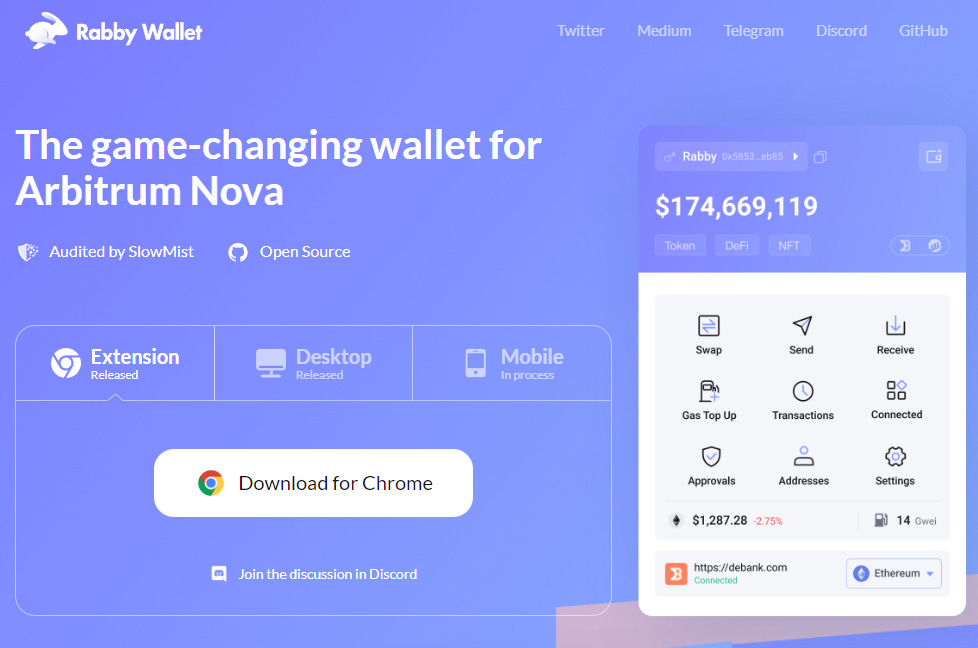
    Rabby lands in that tension: it’s a browser extension designed for people who live across chains and want sane defaults. I’m biased, but it fixes a lot of the friction—better transaction previews, clearer approval controls, and a focus on safety-first behavior. Oh, and by the way… if you’re ready to try it, here’s a straightforward place to get it: rabby wallet download.

    Screenshot of a multi-chain wallet interface showing approvals and network selection

    What “multi-chain” actually changes for everyday DeFi use

    Short version: it reduces context switching and makes approvals less dangerous. Longer version: a multi-chain wallet treats networks as first-class citizens rather than as an afterthought, which matters because every chain has its own risks, fee dynamics, and UX expectations. Medium sentences here are helpful for clarity.

    Think about swapping. On Ethereum mainnet you tolerate higher gas but get better security guarantees. On a rollup you expect near-zero fees and different confirmations. A good multi-chain wallet detects and displays those differences clearly, and it helps you avoid accidentally sending large transactions on the wrong chain. My instinct said that would be obvious, but many wallets still hide that info. That part bugs me.

    Another big win: approvals management. Most hacks start with an unlimited token approval left open to a malicious contract. Rabby gives a native approvals manager where you can set allowances, revoke old permissions, and see which contracts have access to which tokens—all without piecing together the info from third-party dashboards.

    On the downside, more features can mean more surface area. There’s a tradeoff between power and simplicity. I like power; others want one big button that says “go”. On the other hand, power without clarity is dangerous. So the sweet spot is power with guardrails, and that’s what I watch for when testing wallets.

    Practical features that matter (and why)

    Here are features I find genuinely helpful, not just shiny checklist items. Short, then medium, then longer thought.

    – Network-aware gas estimation: you should know expected fees and whether a transaction will use L1 or L2 liquidity.

    – Clear contract source info: who deployed the contract, is it verified, has it been audited? This isn’t foolproof, but it’s a start.

    – Per-contract allowance management: infinite approvals are convenient, but revoking or limiting them is a must. Rabby surfaces this in the UI so it’s not buried.

    – Transaction simulation or readable previews: show the token flows, the value changes, and flag potential sandwich attack risk or slippage issues. Complex transactions deserve readable breakdowns; users shouldn’t need to decode calldata to feel safe.

    – Account abstraction & smart accounts support: ok, not all users need this yet, but as smart contract accounts become common, wallets that support them will make onboarding smoother—and that matters for broad DeFi adoption.

    I’ll be honest: no wallet is perfect. There’s always an edge case. But feature choices matter more than feature counts. A lean, thoughtful implementation beats a feature bag with confusing labels every time.

    FAQ

    Is a browser extension wallet safe to use for large amounts?

    Short answer: use hardware keys for significant sums. Medium answer: browser wallets are convenient and can be secure if you follow good practices—use a strong seed, enable any protective features the wallet offers (like phishing detection or transaction previews), and connect a hardware signer for big trades. Longer thought: the browser environment is inherently more exposed to web-based attacks than cold storage; combine layers—extension + hardware + careful site hygiene—and you’ll reduce risk considerably.

    How does Rabby handle approvals differently?

    Rabby gives an approvals manager in the extension so you can see and revoke token allowances without external tools. It also warns you about unlimited approvals and provides one-click revert options. That immediacy changes behavior—users tend to be more cautious when the UI makes permission management easy, which is a small but meaningful UX shift toward safety.

    Here’s another practical tip: test with small amounts first. Seriously. Use a tiny transfer, confirm the flows, then scale up. My first time bridging tokens I skipped that step and learned the hard way—costly lesson. So do the micro-test. It saves tears.

    On a cultural note, US DeFi users tend to prefer direct control over custodial simplicity. We value being able to inspect and decide. That shapes which wallet features gain traction here: transparency, brevity, and clear failsafes. Rabby leans into transparency in the extension UX, which matches that local preference.

    Talking about UX—there’s a social friction point I keep running into. People assume tokens and approvals are obvious. They’re not. Wallets that educate without patronizing will win long-term. They need to say: “This is what you’re approving, this is who can move your tokens, here is the risk.” When a wallet does that well, users feel more confident. And confidence encourages experimentation, not paralysis.

    Final note: the future is fragmented. More chains, more specialized rollups, and more smart-account abstractions are coming. You can either fight that complexity or build guardrails into the tools people use. I prefer tools that meet users where they are and help them level up safely. Rabby is one of those tools worth trying if you live in the multi-chain world—and again, if you want to give it a spin, here’s the link for a quick start: rabby wallet download.

  • Why Event Contracts Are the Quiet Revolution in Regulated Trading

    Okay, so check this out—event contracts feel like a different animal. Wow! They look simple on the surface, but they force you to think differently about probabilities and market incentives. Initially I thought prediction markets were just a novelty, but then I watched liquidity migrate from other venues and realized this format actually aligns incentives in ways cash markets rarely do. On one hand they’re intuitive; on the other, they reveal hidden information slowly, and that mismatch is what makes them fascinating.

    Here’s a short example that sticks with me. Really? Traders price the probability of a hurricane landing within a week, or whether a bill will pass Congress. My instinct said that sounded gimmicky at first, and I filed it under “fun toy.” Then I sat with traders, regulators, and a compliance officer in a cramped conference room, and the convo shifted—fast—because risk transfers there are measurable and immediate in a way you’d expect from options markets. The rules matter here, and the regulatory overlay changes behavior dramatically.

    Event trading gets under your skin. Whoa! It reveals beliefs rather than preferences, roughly speaking, and that matters for forecasting. On top of that, when a platform is regulated—yes, I mean under CFTC-like oversight—participants change how they hedge, how they size positions, and even how they phrase orders. Something about a compliance stamp makes institutional players peek in, and that creates a feedback loop that improves price discovery over time.

    I’ll be honest—this part bugs me. Hmm… the temptation for thought experiments is huge. But regulated event contracts are not the same as betting on a sports app. There are contract specifications, audit trails, cleared settlements, and capital rules that prevent a single bad actor from blowing up the pool. So the market is both freer and more constrained, weirdly enough. That tension is where innovation lives.

    Now let’s get practical. Here’s the thing. Creating an event contract starts with an unambiguous resolution condition, because ambiguity kills markets. Traders punish fuzziness immediately by widening spreads and moving to alternatives. So exchange design spends a lot of energy on wording and fallback mechanisms, and that matters more than shiny UI. When resolution rules are tight, you get sharper prices; when vague, you get noise and hedging that looks like guesswork.

    There are pitfalls though. Really? Sure—manipulation risks exist, especially for low-liquidity events or ones with few independent observers. Initially I assumed that regulation would eliminate manipulation, but then realized it merely raises the cost and changes the vectors of attack, not the possibility itself. On the other hand, tools like position limits, margin requirements, and post-trade surveillance help a lot, and over time they reduce false signals and boost credibility.

    Design choices shape trader behavior. Wow! Some exchanges let traders create markets, others curate them tightly. My instinct said open creation would lead to richer markets, and that turned out to be right in many niches—but only when paired with active moderation and clear resolution policies. Otherwise you get very very noisy marketplaces that look like classifieds, which investors avoid. So curation plus user creation is a subtle balance.

    Think about liquidity. Hmm… liquidity concentrates where questions matter to real-world decisions, not necessarily where they’re most sensational. Long-term macro events attract steady, institutional interest, while short-term celebrity or viral events draw retail attention but fade quickly. Initially I thought retail volume could sustain most markets, yet the evidence suggests institutions provide depth and continuity, especially under regulated trading frameworks where capital and compliance are aligned.

    On the technology side, event contracts sit at a sweet spot between exchanges and prediction platforms. Whoa! They require matching engines and clearing, but also tight metadata management and dispute resolution workflows that traditional derivatives desks rarely ponder. Exchanges build rules for cancellations, ambiguous outcomes, and “oracle” decisions—the human element—which regulators scrutinize closely. That human-machine mix is a feature, not a bug, because it preserves finality with accountability.

    Risk management is central. Really? Absolutely—because these contracts can concentrate exposure in surprising ways. Initially I thought simple position limits would be enough, but then realized correlated exposures across related events (seasonal, political, commodity-linked) mean you need portfolio-aware margin models. Good platforms model tail risk, scenario test, and stress for cross-event shocks, and that discipline is what separates robust marketplaces from fragile ones.

    Market participants vary. Wow! You get hedgers, speculators, arbitrageurs, and information seekers all trading the same line, which can be chaotic. My instinct said arbitrage would smooth prices, and indeed when markets are connected—through calendar spreads or synthetic positions—arbitragers enforce internal consistency quickly. But when linkages are missing, mispricings can persist, and that’s where sharp traders reap gains and where regulators keep an eye out.

    A trader watching event-market screens with probabilities and spreads

    Why regulation changes the game

    Regulated venues create trust. kalshi login is an example that many reference, because having a visible rulebook and regulatory oversight encourages institutional participation and gives retail users a clearer recourse path. Initially I thought regulation would slow innovation, but then realized it often guides it; firms innovate within constraints, and those constraints can produce safer, more scalable markets. On the flip side, compliance costs filter out some experimental setups that might have been interesting in an unregulated sandbox.

    There’s also an educational challenge. Hmm… people conflate event trading with gambling, and that perception can hinder adoption and policy support. I’m biased, but I see the value in formalizing questions so prices convey useful signals to decision-makers. When companies, governments, or analysts read market-implied probabilities they can act differently—allocating resources, hedging exposures, or even shifting public narratives based on market consensus.

    But it’s messy. Whoa! Regulation introduces delays, reporting obligations, and identity checks that change participation demographics. Traders who value anonymity may avoid these venues, which affects depth. Meanwhile, more conservative players show up, which can stabilize outcomes but may also dampen speculative microstructure that makes markets efficient. That tradeoff is not simple.

    Operationally, exchanges need playbooks for edge cases. Really? Yes—imagine a world where an event’s resolution depends on a delayed government report or a floating definition of “success.” You need fallback arbitrators, time windows, and appeal processes. Firms invest heavily in rulebooks and simulations to avoid social media blowups and legal disputes, and that investment matters more than any front-end polish.

    So where does this leave traders and builders? Here’s the thing. For traders, think probabilistically and size like you respect tail risk—because event markets can move hard when new info arrives. For builders, focus on clear language, robust surveillance, and incentives that attract liquidity providers. For policymakers, recognize the signal value of these markets but insist on safeguards that prevent manipulation and protect retail users. I’m not 100% sure about every policy angle, but those are practical starting points.

    Common questions

    Are event contracts legal and regulated in the U.S.?

    Yes—certain platforms operate under CFTC-like frameworks and are designed to meet regulatory standards, including transparency and clearing obligations. That regulatory framework makes them more durable for institutional use, though it doesn’t remove all risk.

    Can event contracts be gamed or manipulated?

    They can, particularly when liquidity is thin or outcomes are easily influenced, but position limits, margining, surveillance, and clear resolution rules mitigate many manipulation pathways. It’s a cat-and-mouse game, honestly, but regulated markets have better defenses.

  • Keeping Secrets in Plain Sight: Private Multi-Currency Wallets, Haven Protocol, and On-Device Exchanges

    Whoa! The privacy space feels wild right now. I’m biased, but that fuzziness—between convenience and secrecy—has always grabbed my attention. Initially I thought hardware was the only way to be truly private, but then I started using wallets that mix native privacy coins with on-device exchanges and my assumptions shifted. Actually, wait—let me rephrase that: the tech feels more approachable than it used to, though the trade-offs are real and often subtle.

    Really? Yes. My first impression was skepticism. My instinct said that desktop GUI wallets couldn’t handle anonymous flows without leaking metadata. Then I played around with a few setups involving Monero, Bitcoin, and neutral bridges, and somethin’ surprised me: well-designed privacy wallets reduce surface area even while offering multi-currency convenience. Hmm… that initial gut reaction softened as I tested more.

    Here’s the thing. Privacy isn’t one thing. It’s layers. On one hand you have ledger-level protections like ring signatures and stealth addresses that Monero uses. On the other hand you have network and metadata protections such as Tor, I2P, and well-implemented exchange-in-wallet flows that avoid third-party ties. On balance, using a wallet that integrates the Haven Protocol-style privacy primitives (or supports havens of liquidity) with on-device order-matching means you can move value without permanently tying identities to every swap, though actually nothing is magic—there are always edges.

    Check this out—privacy-friendly wallets finally feel usable. Really. Years ago you needed multiple tools and a fair bit of command-line patience. Now, some wallets ship with built-in exchanges or swap features that work locally or peer-to-peer. The UX is still rough in places. This part bugs me: too many wallets advertise privacy but slip in centralized endpoints for the swap engine. Be skeptical of “privacy” that depends on one hosted server.

    Wow! I want to walk through a practical mental model. Short version: keep your private keys local, use privacy-native coins where possible, protect network metadata, and use exchange-in-wallet features that either run locally or route through privacy-preserving protocols. My experience using a wallet that supports Monero and BTC alongside swap utilities showed that when the swap is trustless or runs via privacy relays, the metadata footprint shrinks considerably. On the flip side, hosted swap APIs can create links between your addresses—even if the funds themselves are obfuscated by crypto primitives.

    Screenshot of a privacy wallet app showing Monero and Bitcoin balances with a swap interface

    How Haven-ish Architecture Helps

    Okay, so what is the Haven Protocol pattern in this context? At base, it’s about isolating value flows and creating private liquidity pools so users can move between assets without on-chain exposure. Initially I thought that simply wrapping assets would be enough, but my tests revealed more: the implementation details—order matching, routing, and how keys are managed—matter a ton. On one hand, an off-chain matching system can preserve privacy if it never learns linkage data. Though actually, if operators log order books or require KYC, all bets are off.

    My working principle became: trust the cryptography, verify the implementation. If the swap runs inside the wallet or via zero-knowledge protocols, you reduce centralized exposure. If a wallet integrates Haven-like privacy reservoirs or supports timelocked, routed swaps, then you can hide the trail better than plain swaps through a conventional exchange. But remember: network metadata still leaks unless you use Tor or similar tunnels, and many wallets don’t enable that by default.

    Seriously? Yes—networking is the silent leaker. When you initiate a swap, the timing, IP, and API calls are all signals that an observer can correlate. My approach: use a wallet that supports connection via Tor, route swaps across randomized delays when practical, and avoid linking your privacy coin addresses to identifiable services. These steps don’t guarantee anonymity, but they push you closer to plausible deniability.

    One practical tip: separate transaction epochs. Make a habit of batching unrelated transactions in different sessions and avoid reusing addresses. I know—this is basic advice. Yet people skip it because it’s inconvenient. I’m guilty of that, too. Still, small operational habits multiply into meaningful privacy gains over time.

    Exchange-in-Wallet: Convenience vs. Risk

    Really? Exchange-in-wallet features are a double-edged sword. They are tempting—one app, one seed, instant swaps. But how they implement the swap determines whether you’re trading privacy for convenience. Some wallets implement atomic swaps or rely on decentralized liquidity providers, which is preferable. Others use hosted swap services that can log transactions. The difference matters.

    At first I leaned into convenience. Then I dug into logs and manifests and realized: even anonymized telemetry can be deanonymized if combined with public blockchain flows. On one hand, hosted swaps help adoption; on the other, they create single points of compromise. Balance is key, though that’s easier said than done.

    Here’s a practical checklist I follow personally: 1) Prefer wallets that allow on-device key generation and local signing. 2) Use swaps that either run as atomic swaps or use privacy-preserving intermediaries. 3) Route traffic through Tor or a VPN that you control. 4) Avoid KYC endpoints whenever your use case requires privacy. These aren’t perfect shields, but they’re layered protections.

    Whoa! If you want a place to start, try a wallet that keeps keys local and supports both Monero and Bitcoin, and that optionally offers in-app swaps. I’ve used wallets that felt clunky but respectful of privacy principles—wallets where I could seed locally, enforce Tor routing, and still exchange between assets. One option worth checking is cake wallet for mobile users who want multi-currency support with privacy-conscious features. I’m not endorsing everything about it—no app is perfect—but it represents the sort of trade-offs I’m talking about.

    Operational Security: The Human Layer

    Hmm… this is where most people slip. Tech can be private, yet people broadcast linkable signals. Initially I thought device hygiene was obvious. But then I watched a friend post a receipt screenshot that included a transaction hash. Oops. On one hand we blame the tools, though actually human behavior is the leak vector more often than not.

    Here’s what I do and recommend: compartmentalize identities; use separate wallets for non-private and private activity; avoid mixing KYC’d exchanges with privacy coin inflows; and keep a rolling set of addresses. Also, consider air-gapped or burner devices for high-sensitivity moves. Yes, it’s cumbersome. Yes, most people won’t do it. But if privacy matters to you, these steps matter.

    One more human tip: practice with small amounts first. There’s an instinct to test a new wallet with a large transfer. My instinct said don’t. So I followed it, and saved myself a headache when a swap misrouted funds because of a misconfigured fee setting. Small rehearsals reveal UI quirks and network behaviors without putting your nest egg at risk.

    FAQ: Quick Answers From Real Use

    Can I really stay anonymous moving between Monero and Bitcoin?

    Short answer: yes, to a degree. Monero offers strong transaction privacy by design. Moving from Monero to Bitcoin introduces challenges because Bitcoin is more linkable. If you use privacy-preserving swaps, route through privacy relays, and avoid reuse of addresses, you can achieve plausible deniability. But remember—no setup is bulletproof against nation-state level adversaries.

    Are in-wallet exchanges safe?

    It depends. If the exchange is trustless or uses decentralized matching and doesn’t see your private keys, it’s relatively safe. If it requires you to send assets to a hosted custodian or logs identifiable metadata, it’s riskier. Evaluate the swap architecture, not the marketing copy.

    What’s the easiest privacy improvement I can make today?

    Use Tor for your wallet connections, stop reusing addresses, and keep keys on-device. Those moves are simple and effective. I’m not 100% sure they’ll solve every threat, but they close off the low-hanging fruit.